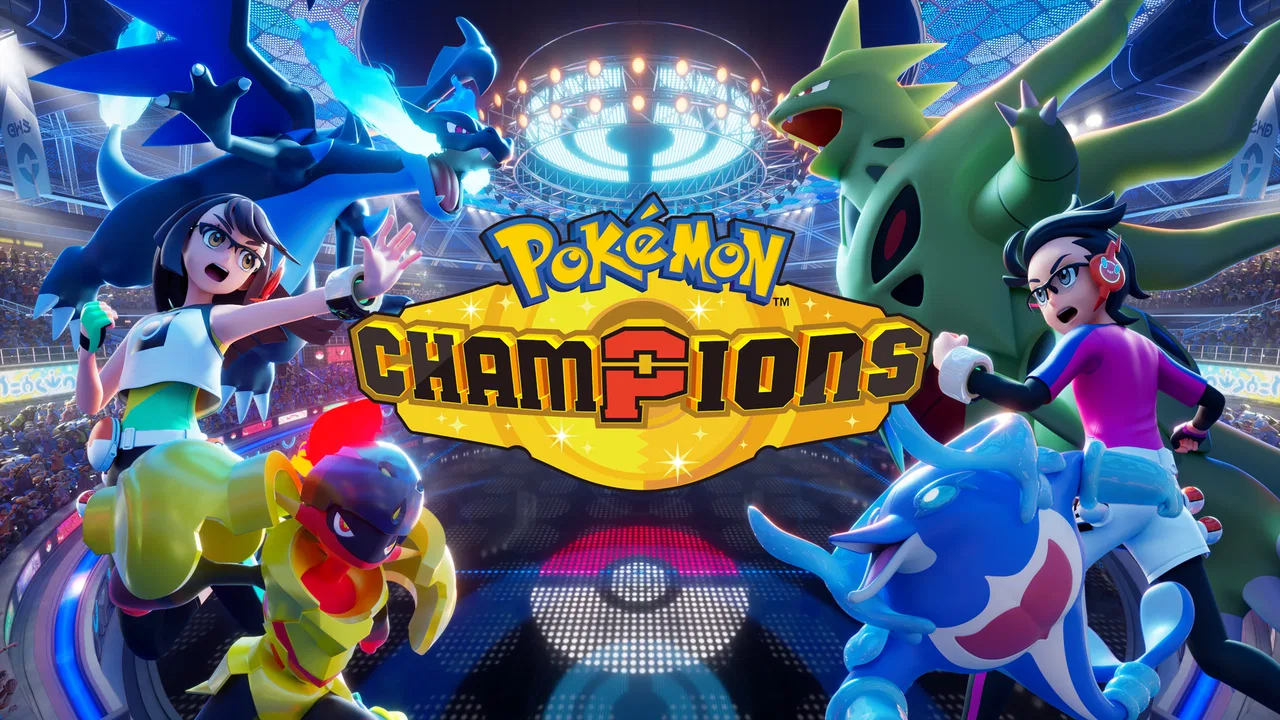
Pokémon Champions
- 4.7
- Rating
- 5.00M
- Installs
- Free
- Price

 Analysis by App-foxy
I went into Pokémon Champions expecting a familiar Pokémon battle experience adapted for a phone, and that is exactly where its appeal begins. This is a free strategy game from The Pokémon Company, built around the recognizable decision-making that makes Pokémon battles easy to understand but surprisingly difficult to master. You choose your team, read the situation, select an action, and then live with the result. That simple sequence creates the real hook: every turn gives you information, every mistake teaches you something, and a close loss can make another match feel immediately worthwhile.
The game is available for everyone, which makes it approachable for younger players and for anyone who has never spent much time with the series. At the same time, the strategic layer gives experienced Pokémon fans something to think about beyond simply choosing the strongest-looking move. I found the best way to enjoy it was to treat each battle as a short experiment rather than as a test I had to win every time. That attitude makes the defeats less frustrating and helps reveal why the game has attracted a 4.7 average from around 234 thousand ratings.
How the first action sets the battle in motion
The first meaningful action in a match is not just tapping an attack. It is deciding what kind of information I want from the opening exchange. I might apply immediate pressure, protect a useful Pokémon, or make a safer choice while watching how the opponent responds. That opening decision matters because Pokémon battles are built on consequences. A move that looks sensible in isolation can become a poor choice if it gives the other side the tempo it needs.
You May Also Like

 AccuWeather: Weather Radar
AccuWeather Review: A Quick, Clear Forecast for Everyday Decisions
For everyday plans, the best forecast is the one you can understand quickly. AccuWeather makes rain timing, radar, and local conditions easy to act on, with a few trade-offs.

 Hill Climb Racing
Why Hill Climb Racing Still Turns Crashes Into One More Run
A tiny car, a bumpy hill and one more upgrade: Hill Climb Racing keeps resurfacing because its simple chaos makes every near-miss feel personal.

 AliExpress - Shopping App
AliExpress Makes Global Shopping Feel Personal, but Shoppers Bear the Risk
AliExpress turns a global marketplace into a pocket-sized discovery engine. Its reach is useful, its shopping loop compelling, and its trade-offs easy to miss.

 Lords Mobile: Kingdom Wars
Lords Mobile Is a Kingdom-Building Routine, Not a Quick Match
A case-by-case verdict on the building, battles, device demands, and social commitments that make Lords Mobile rewarding for some players and exhausting for others.

 PDF Scanner app - TapScanner
TapScanner Makes Paperwork Easier to Capture, Check, and Share
TapScanner makes scanning with a phone feel less like a rescue operation and more like a dependable step in getting work done. Its capture tools are useful, though not flawless.

 Block Blast!
 Shows How Much a Puzzle Game Can Leave Out
A quiet grid game shows why puzzle players increasingly value instant clarity, repeatable skill and low-pressure play—and where the genre still needs to catch up.
More From Our News Desk
View All News


This is where the strategy category fits the game well. The action is turn-based and readable, but the outcome is not always obvious before I commit. I have to consider type relationships, the condition of the active Pokémon, and the possibility that the opponent expects the most obvious response. The game does not need constant movement or complicated controls to create tension. The pressure comes from choosing with incomplete information.
For a new player, I recommend resisting the urge to select the biggest-looking attack every turn. A weaker action can be more useful when it preserves a better position for the next exchange. That is one of the first lessons the game encourages: a battle is not a collection of isolated taps. Each decision changes what becomes safe, risky, or possible afterward.
In an everyday situation, this makes the game easy to fit into a break. I can begin a match while waiting for a coffee or during a short commute, then focus on a compact series of decisions instead of learning a large map or managing a long quest. The important qualification is that a quick battle still deserves attention. If I start playing while distracted, I can lose track of the opponent’s pattern and make a poor choice simply because I was not watching the previous turn.
Reading the opponent instead of chasing damage
One of my favorite parts of the opening phase is the shift from attacking to interpreting. After a few exchanges, I start asking what the opponent is trying to preserve and which response they seem to prefer. That changes the experience from “Which button does the most?” to “What will this choice force next?” It is a small but important difference, especially for players coming from more casual mobile games.
The familiar Pokémon framework helps here because the basic logic is understandable. A player can begin with type advantages and gradually add more careful timing, switching decisions, and risk management. I would not recommend trying to memorize everything at once. A better workflow is to notice one recurring mistake per session, such as attacking into a bad matchup or spending a valuable option too early, and then focus on correcting that habit in the next battle.
That approach also makes the game useful for different kinds of players. Children can enjoy the recognizable creatures and straightforward battle language, while older players can examine the reasoning behind each turn. The age rating of Everyone reflects that broad accessibility, although accessibility does not mean every match will feel easy. The rules are friendly; the consequences can still be demanding.
The feedback rhythm keeps each turn meaningful
Good strategy games make the result of an action understandable, and Pokémon Champions benefits from that rhythm. I make a choice, see how the battlefield changes, and immediately receive a reason to reconsider my next move. A successful action creates momentum, while a bad one exposes a weakness I can usually identify after the fact. That clear connection between action and feedback is what kept me from treating matches as random exchanges.
The feedback is most useful when I slow down enough to interpret it. If an attack performs poorly, the lesson may not be that the move is useless. The real issue could be the matchup, the timing, or the fact that I gave up a safer option. Likewise, a successful hit does not automatically mean I should repeat it. The opponent may now have an obvious answer, and repeating the same action can turn an advantage into a predictable pattern.
I found this especially valuable when testing a new team or approach. Rather than changing everything after one loss, I can keep the core plan and adjust a single decision. That creates a practical learning loop: make a choice, observe the response, identify the cause, and try again. It is more satisfying than simply collecting wins because improvement feels connected to something I actually did.
Where the game can feel demanding
The same clarity that makes the battles rewarding can also make mistakes feel personal. When I lose because I misunderstood a matchup or committed too early, there is not much room to blame the controls. That is good design for learning, but it can be tiring if I want a relaxed game that asks very little of me. Pokémon Champions is approachable, yet it is not always passive entertainment.
There is also a mental cost to playing several serious matches in a row. Each battle asks me to remember what has already happened and to anticipate what may happen next. After a few sessions, I noticed that rushing became the main source of poor play. The practical solution is simple: stop after a narrow defeat if I feel myself tapping automatically. Returning later usually produces better decisions than forcing another match while frustrated.
The current version is 1.2.1, and that is useful context for anyone deciding whether to start now. I would still approach the game as an evolving mobile experience rather than assuming that every part will suit me immediately. The core battle loop is the reason to play, not the expectation that every surrounding detail will match a traditional console Pokémon game.
Rewards give the next session a purpose
A battle feels better when the result matters beyond the final screen. In my experience, the reward side of the loop works best when it gives me a reason to refine a team or return with a different plan. A win confirms that a strategy worked under pressure, while a loss can still provide a useful target for improvement. The most valuable reward is often not a virtual item but a clearer understanding of what I should do next time.
That does not mean every player will enjoy the same motivation. If you mainly want exploration, story progression, or a large world to wander through, this game may feel narrow compared with a role-playing alternative. Its satisfaction comes from battles and from the gradual improvement of decisions inside those battles. I would recommend it to someone who enjoys testing a plan more readily than to someone looking for a long narrative journey.
The free entry point makes it easy to try without committing money first. However, in-app purchases range from $4.99 to $49.99 per item, so I would set a personal spending limit before getting deeply involved. The important question is not whether purchases exist, but whether I can keep enjoying the strategy without feeling pushed to buy something whenever progress slows. For a cautious player, the sensible approach is to play the free portion, decide whether the battle loop itself is satisfying, and only then consider spending.
I also think rewards work best when they support experimentation rather than replacing it. If I use the same comfortable approach every time, I may win occasionally but learn very little. A better routine is to use a successful match as permission to test one new idea in the next session. That turns the reward into momentum: the last battle gives me confidence, and the next one gives me a controlled opportunity to grow.
Three practical habits that improved my play
- Review the turning point, not just the final result. After a loss, I look for the first decision that made the rest of the battle harder. Fixing that moment is more useful than vaguely deciding to “play better.”
- Keep one dependable plan and one experimental option. A completely unfamiliar team can make it difficult to tell whether the problem is the strategy or my lack of familiarity. Keeping a reliable foundation gives the experiment a fair comparison.
- Use short sessions for learning and longer sessions for testing. In a short break, I focus on one lesson. When I have more time, I can check whether that lesson still works against different responses instead of judging it from one match.
These habits are not flashy features, but they changed how I experienced the game. They made the reward of a battle feel connected to my own choices rather than to a simple win-or-loss screen. They also reduced the temptation to restart everything after one disappointing result.
Why the reset makes another match tempting
The reset after a battle is a major part of the appeal. Once the match ends, the immediate pressure disappears, but the unanswered questions remain. Could I have protected a certain Pokémon longer? Did I reveal my plan too early? Would a different opening action have changed the entire exchange? Because the next attempt begins cleanly, I can test an answer without carrying every previous mistake into a long campaign.
This is a stronger structure for repeat play than a game that simply asks me to grind through the same content. The reset gives me a fresh decision space while preserving what I learned. I am not starting from zero mentally, even though the next battle gives me a new chance to act. That balance is the reason I often wanted one more match after a close defeat.
Still, the reset can become a weakness if I am playing only to erase a loss. Chasing revenge matches made me rush, and rushing made the same mistake more likely. I get more from the reset when I define a small purpose before starting again: protect a key Pokémon, avoid a predictable move, or wait one turn longer before committing. A specific goal turns repetition into practice.
This is also where the game differs from many familiar mobile strategy alternatives. A deck-building game may revolve around assembling cards, while a real-time strategy game emphasizes resource collection and map control. Pokémon Champions places more weight on reading a direct battle and managing the consequences of individual choices. If you prefer constant expansion or real-time action, those alternatives may provide more variety. If you enjoy compact tactical exchanges with recognizable rules, this reset structure is a strong fit.
Who should make room for it
I see the best audience as Pokémon fans who want battles to be the main event, strategy players who appreciate a readable ruleset, and mobile users who prefer repeatable sessions over a long open-world commitment. It is also a good choice for someone who likes learning through losses, because the feedback is most rewarding when I am willing to examine what went wrong.
I would be more cautious recommending it to a player who wants a purely relaxing experience, a deep story, or an adventure built around exploration. The familiar Pokémon identity may attract that person, but the actual satisfaction comes from tactical decisions. Someone who dislikes competitive pressure or does not want to think through several possible responses may find the same loop repetitive rather than compelling.
The game’s audience is already substantial, with over five million installs, but popularity does not remove the need to choose carefully. I would not install it simply because it carries the Pokémon name. I would install it if the idea of repeating a battle to understand one decision sounds enjoyable. That is the clearest test of whether it belongs on your phone.
My verdict on the complete action-to-reset loop
Pokémon Champions works because its loop is easy to enter and difficult to exhaust. I take an action, receive immediate feedback, earn either progress or a lesson, reset the situation, and return with a better question than the one I had before. The familiar Pokémon setting makes the first step comfortable, but the strategic consequences give the game its staying power.
I appreciate that it does not need to overwhelm me with complicated systems to create meaningful tension. A single decision can change the direction of a battle, and a narrow defeat can be more instructive than an effortless win. The trade-off is that the game demands attention, and the presence of purchases means I would play with a clear spending boundary rather than treating every reward as something I should buy.
As a free strategy game for Android and iOS, it is worth trying if you want focused Pokémon battles and a reason to keep refining your choices. I would skip it if your priority is exploration, storytelling, or a completely hands-off mobile pastime. For me, the strongest recommendation is simple: play a few matches, identify one decision that cost you the battle, and see whether the idea of correcting it makes you want to begin again. If it does, Pokémon Champions has probably found the right kind of player in you.
FAQs for Pokémon Champions
01What is Pokémon Champions?
Pokémon Champions is a competitive Pokémon battle game focused on strategy, team building, and online matches. Rather than offering a traditional exploration-based adventure, it is designed around battling with Pokémon and testing your skills against other players. Before downloading, you should understand that its main appeal is competitive play, learning battle mechanics, and improving your team instead of collecting items or exploring a large story world.
02Is Pokémon Champions free to download and play?
Pokémon Champions is expected to be available as a free-to-start title, although availability, supported platforms, and optional purchases may vary by region and release version. Players should check the official store listing before installing it. As with many competitive mobile games, some features, cosmetic content, or convenience options may involve in-app purchases, so reviewing the payment information is recommended before allowing children to play.
03Can I play Pokémon Champions offline?
Pokémon Champions is primarily built around online Pokémon battles, meaning a stable internet connection will likely be required for its main features. Offline access may be limited or unavailable, particularly for matchmaking, account synchronization, updates, and competitive events. If you plan to play while traveling or with unreliable mobile data, check the final system requirements and connection recommendations before downloading the game.
04Does Pokémon Champions support cross-platform play or Pokémon transfers?
Cross-platform functionality and Pokémon transfers are important features for many players, but the exact support depends on the game’s official launch details and connected services. Do not assume that Pokémon from other titles can be transferred automatically or that every device shares the same progress. Before investing time or money, review the official compatibility information for accounts, saves, supported platforms, and any Pokémon HOME-related features.
05Is Pokémon Champions suitable for beginners?
Pokémon Champions can be suitable for beginners, but its battle-focused design may feel demanding if you have never played competitive Pokémon before. Understanding types, abilities, moves, team roles, and turn order will make a significant difference. New players should expect to learn through practice, tutorials, and early matches, while experienced players may enjoy the deeper strategic decisions and competition more immediately.
Pros
- Strategic battles focus on timing
- positioning
- and smart move selection.
- Pokémon battles are designed around competitive decision-making.
- Matches can offer satisfying depth for experienced players.
- The Pokémon brand makes the game approachable for newcomers.
- Regular updates could keep the competitive experience feeling fresh.
Cons
- The competitive focus may feel less appealing to casual Pokémon fans.
- Learning team strategies can be intimidating for new players.
- Online battles may be affected by connection quality or matchmaking.
- Progression details and available Pokémon may vary by platform.
- Competitive matches can become repetitive without varied battle modes.

Pokémon Champions
Gallery